Kansas among 22 states allowing in-state tuition for undocumented students
(The Sentinel) – For more than
20 years
, the State of Kansas has offered in-state tuition to undocumented students since then-Governor
Kathleen Sebelius
signed
House Bill…

(The Sentinel) – For more than
20 years, the State of Kansas has offered in-state tuition to undocumented students since then-Governor
Kathleen Sebeliussigned
House Bill 2145into law in 2004. Now, with
Floridaand
Texasdiscontinuing its programs this year, Kansas remains one of
22states and the District of Columbia to offer the advantage to illegal aliens.
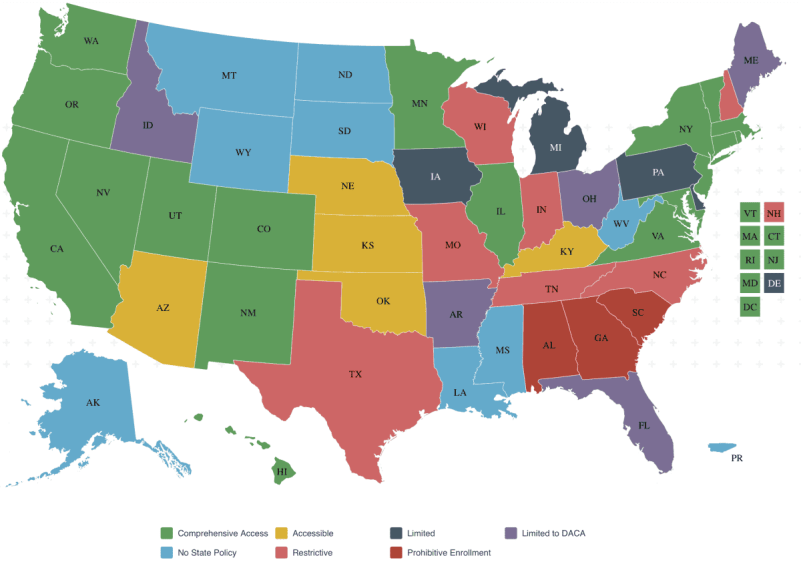
In the 2025 legislative session in the Sunflower State, an effort was made to outlaw the practice, but
SB 254died in committee.
Eligibilityin Kansas for in-state tuition includes any student who:
- has attended an accredited Kansas high school for three or more years and;
- has either graduated from an accredited Kansas high school or has earned a GED issued in Kansas and;
- (a) in the case of a person without lawful immigration status; has signed and filed an affidavit with the institution stating that the person or the person’s parents have filed an application to legalize such person’s immigration status, or will file such an application as soon as such person is eligible to do so, or; (b) in the case of a person with a legal, nonpermanent immigration status, has filed with the postsecondary educational institution an affidavit stating that such person has filed an application to begin the process for U.S. citizenship or will file such application as soon as such person is eligible to do so.
The issue is controversial.
Supportersargue many undocumented students could not afford ever-increasing tuition without the benefit and become productive and tax-paying members of society with their degree-in-hand. Opponents counter that the practice discriminates against out-of-state Americans who might wish to attend college in another state but are prevented from doing so by the cost. The discrimination argument is one made by the Trump Administration in its
Executive Orderissued in the Spring:
The Attorney General, in consultation with the Secretary of Homeland Security and appropriate agency heads, shall identify and take appropriate action to stop the enforcement of State and local laws, regulations, policies, and practices favoring aliens over any groups of American citizens that are unlawful, preempted by Federal law, or otherwise unenforceable, including State laws that provide in-State higher education tuition to aliens but not to out-of-State American citizens that may violate 8 U.S.C. 1623 or that favor aliens in criminal charges or sentencing.When reached for comment, Kansas House Speaker Dan Hawkins hinted at another attempt at a legislative remedy next year: “Like a lot of people, I was surprised to learn that Kansas was in this group of states. It’s definitely something we’re going to need to take a look at next session.”