SCOTUS to take religious freedom case regarding former prisoner’s Rastafarian beliefs
The U.S. Supreme Court has agreed to hear a right of conscience case from former inmate Damon Landor against Louisiana State Prison officials.
Landor, a practicing Rastafarian, grew dreadlocks…
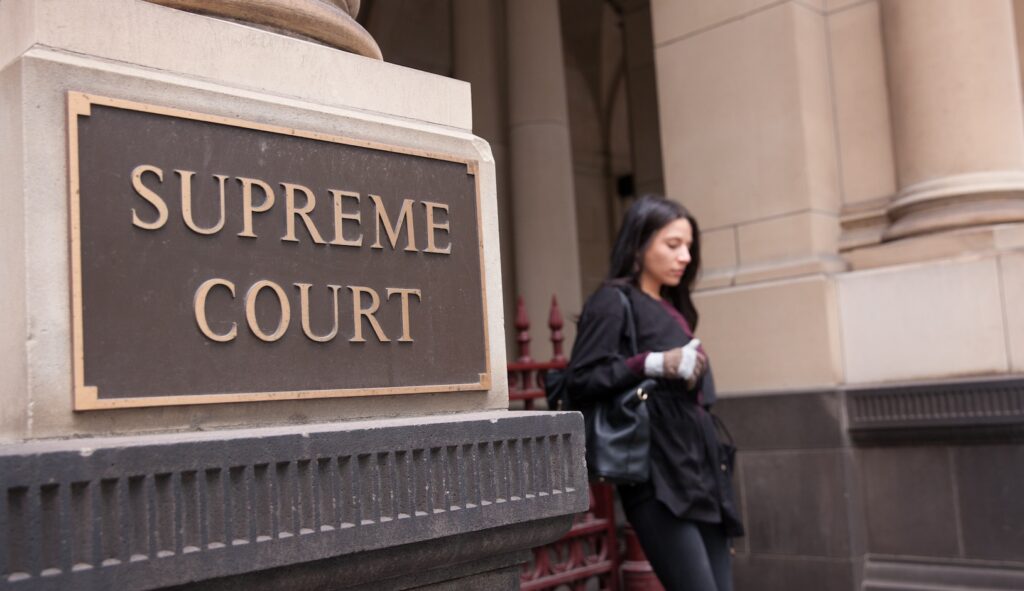
The U.S. Supreme Court has agreed to hear a right of conscience case from former inmate Damon Landor against Louisiana State Prison officials.
Landor, a practicing Rastafarian, grew dreadlocks for more than 20 years, according to his religious customs. While briefly imprisoned for a drug offense, Landor received religious accommodations for his hair length, according to the Becket Fund for Religious Liberty.
Three weeks before his sentence ended, he transferred to Raymond Laborde Correctional Center. There Landor explained his beliefs and their previous acceptance, providing an appeals court ruling that protected Rastafarian inmates from having their heads shaved.
After the ruling ended up in the trash, the warden allegedly demanded documentation from Landor’s sentencing judge, saying it was “too late” to call his lawyer, according to the fund’s brief. Guards handcuffed him to a chair and shaved his head, the brief stated.
After his release from prison, Landor sued the warden, the state corrections secretary and the guards.
Landor v. Louisiana Department of Corrections and Public Safety cites the Religious Land Use and Institutionalized Persons Act (RLUIPA), which ensures religious liberty for inmates.
RLUIPA applies federal protections under the Religious Freedom Restoration Act (RFRA) at the state level, specifically to those incarcerated, Becket Counsel Amanda Salz explained in an interview with The Heartlander.
“Anyone who is incarcerated does not forego their religious rights at the prison gates,” Salz said. “Prison officials, just like any other government entity, cannot substantially burden a prisoner’s right without showing that there is a compelling government interest and the violation is narrowly tailored to satisfying that interest.”
The U.S. Court of Appeals for the Fifth Circuit dismissed Landor’s claims, saying RLUIPA does not cover his request for damages. Salz said the dismissal is a misinterpretation and Landor can legally seek damages. Fifth Circuit judges declined to rehear the case while condemning the actions as “stark and egregious” and urging the Supreme Court to review the case.
In its friend-of-the-court brief, the Becket Fund compares the protections under the Religious Freedom Restoration Act (RFRA) to RLUIPA, arguing, “without accountability for officials who trample religious rights, RLUIPA’s protections are hollow.”
This brief is one of 21 other amici briefs submitted on behalf of Landor, Salz said.
“It’s friends of the court that are essentially weighing in in support of Landor to show that there is a wide bipartisan support for religious liberty, generally, but particularly for claims in prison,” Salz said.
Landor’s case will bring clarity and consistency across state and federal courts for religious freedom protection under RFRA and RLUIPA, Salz said.
“Prisoners surrender many rights at the jailhouse door, but they do not surrender their conscience. The government doesn’t get to silence faith just because it holds the keys,” Becket Counsel Daniel Chen said in a press release. “The Court should give RLUIPA real teeth and allow prisoners to hold state officials accountable when their rights are dismissed, denied, or steamrolled by those in power.”
The U.S. Supreme Court will hear oral arguments Nov. 10.