Op-ed: Teacher survey shows they need help, but they’re looking in all the wrong places
As a homeschool mom, I’m constantly discovering former public-school teachers turned homeschoolers – and I admire them as some of America’s greatest yet often-unrecognized…
As a homeschool mom, I’m constantly discovering former public-school teachers turned homeschoolers – and I admire them as some of America’s greatest yet often-unrecognized heroes.
Take Sallie Schaaf Borrink, a former schoolteacher who now runs a website of homeschool resources.
“When the teachers start leaving their chosen profession to homeschool their children, people need to take notice that something truly is seriously amiss,” Borrink wrote in 2015. “(T)hese talented, dedicated teachers who become homeschoolers are the indicator species and they are speaking loudly and clearly about the health of the educational environment.”
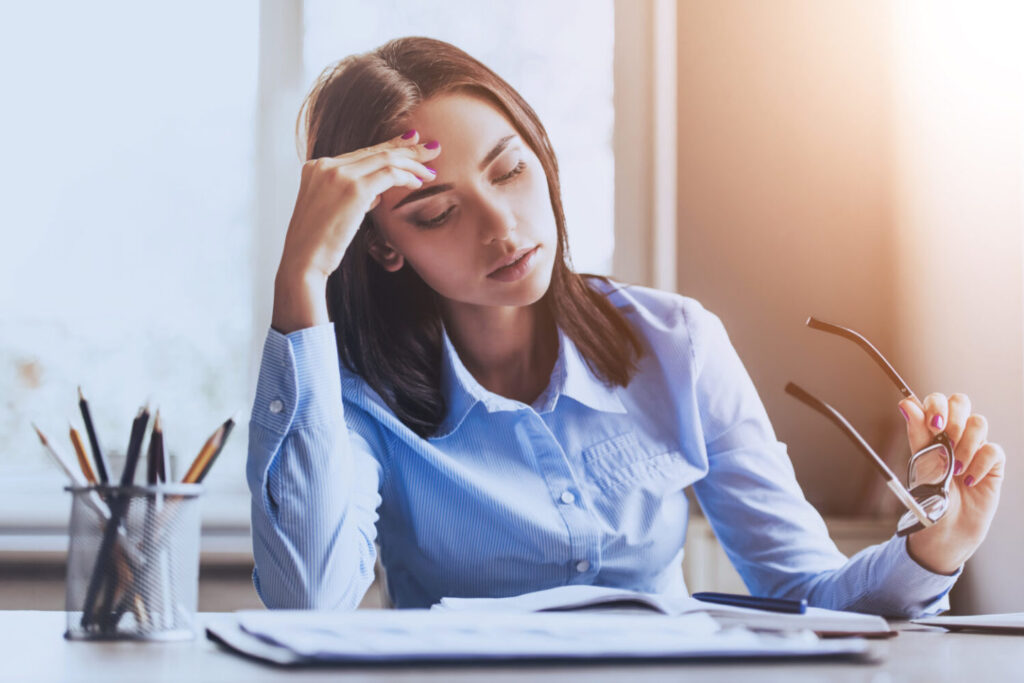
One decade later, a 2025 “back to school” teacher survey from the Connecticut Education Association found nearly 100% cited stress and burnout as their top concerns, according to CTNewsJunkie.
Meanwhile, more than 60% believed their ongoing issues had worsened over the last two years.
Until these educators realize proven solutions exist outside public schools, they’re unfortunately trapped in a vicious cycle: enabling the bureaucratic apparatus causing such misery in the first place.
“You couldn’t pay me to go back to the public system and torture kids,” the late Kellista Keaton told me, whom I had the privilege of interviewing before her death in 2023. “Once you discover this world where kids really learn even more than they’re learning in a public setting, why would you go back?”
‘This will be my kid’
Keaton’s story reflects many of the schoolteachers-turned-homeschoolers I meet – an idealist who grew up loving to learn, yearning to impart this love to others.
“I just loved all of my classroom experiences, loved everything about the public school system, had a very idyllic view of my own education,” she said. “I was that one kid that was very studious and loved learning.”
Once she entered the teaching profession, however, she found challenges all too common throughout the public-school world: stressful environments, unsupportive administrators and disruptive students whose educational needs went unmet.
“I had a principal that was not supportive at all with anything that I did alternatively, so everything I wanted to do he said no to,” she said. “You can’t let the kids play outside. You can’t do nature walks. You can’t do journals unless they were academic – they can’t have fun free-time journals. Just insane.”
A revelation hit Keaton when her daughter turned 3 and began displaying many of the actions she saw at her school, which tended to result in ADHD diagnoses.
“I saw all these special-needs kids in my building who were playing in corners and having meltdowns, and going to the padded room, and screaming under the table and throwing things, and I thought, ‘This will be my kid,’” she said. “She’ll be labeled as this horrible child just because she would hate this environment.”
Fortunately for Keaton’s daughter, she had a mother who loved to research – and knew how to find solutions.
Keaton dove deep into sensory processing disorder, autism and a range of educational methods: Reggio Emilia, Waldorf, Montessori, project-based and community-based learning.
“I had never heard any of these education terms as a teacher,” she said.
Ultimately, Keaton opened her own child-led preschool and discovered how children’s behavioral issues disappeared as they responded to an education tailored to their needs.
“If you set up this environment that nurtures wonder and nurtures questions and play, which is how children learn – we’ve forgotten that – you don’t have to do much else,” she said. “They begin to drive it.”
Schooling versus education
Keaton followed in the footsteps of another former public-school teacher, John Taylor Gatto, who became one of homeschooling’s biggest advocates.
“If we’re going to change what is rapidly becoming a disaster of ignorance, we need to realize that the school institution ‘schools’ very well, but it does not ‘educate’ – that’s inherent in the design of the thing,” he argued.
Ironically, Gatto’s devastating critiques came in a speech accepting the 1990 New York City Teacher of the Year award.
“Schools and schooling are increasingly irrelevant to the great enterprises of the planet. No one believes anymore that scientists are trained in science classes or politicians in civics classes or poets in English classes. The truth is that schools don’t really teach anything except how to obey orders.”
Sounds familiar?
Gatto then pinpoints the root of the problem – not educators themselves, but “the abstract logic of the institution” they’re fighting even as they work inside it.
“Although teachers do care and do work very hard, the institution is psychopathic – it has no conscience,” he concluded.
“Schools are intended to produce through the application of formulae, formulaic human beings whose behavior can be predicted and controlled.”
This issue has compounded in the three decades since, resulting in an even more prominent “disaster of ignorance” affecting current generations. Just a few examples:
- 46 of Maryland’s public schools had two or fewer total students testing proficient in math this year – despite a record $14.3 billion in funding.
- Recent figures from the National Assessment of Educational Progress show fourth and eighth graders have fallen further behind in reading since the COVID-19 pandemic.
- Internationally, U.S. students’ performance plummeted to record lows in 2023, “the first assessment since 2019.”
No wonder, then, why public-school teachers are feeling stressed and burned out.
“The problems in our schools are growing more severe, and teachers’ calls for action are being ignored, leaving students to pay the price,” Connecticut Education Association President Kate Dias said. “Our educators are underpaid, disrespected, and stretched beyond their limits – and many are being driven out of the profession in search of careers that value their work, pay them fairly, and treat them with dignity – leaving many classrooms without certified educators to teach our children.”
In all honesty, I don’t often find myself agreeing with teachers’ union presidents.
I also take issue with the assumption that “certified educators” somehow carry an innate advantage over noncertified ones. Research by the National Home Education Research Institute concludes, “Whether homeschool parents were ever certified teachers is not notably related to their children’s academic achievement.”
But I can sympathize with her overall sentiment. Meeting former schoolteachers-turned-homeschoolers and listening to their heart for helping children has proven most of us want the same outcome: well-educated, confident and competent graduates who thrive in life after school.
Unfortunately, public education is not only failing to achieve this goal, but also harming students and teachers in the process. The more people who can see and understand this – both inside and outside the system – the better.