American nuclear energy just reached a milestone decades in the making. Is the ‘renaissance’ finally happening?
A nuclear energy startup beat the clock by a month when its advanced reactor reached a milestone pivotal for safe operation, advancing a goal set by President Donald…
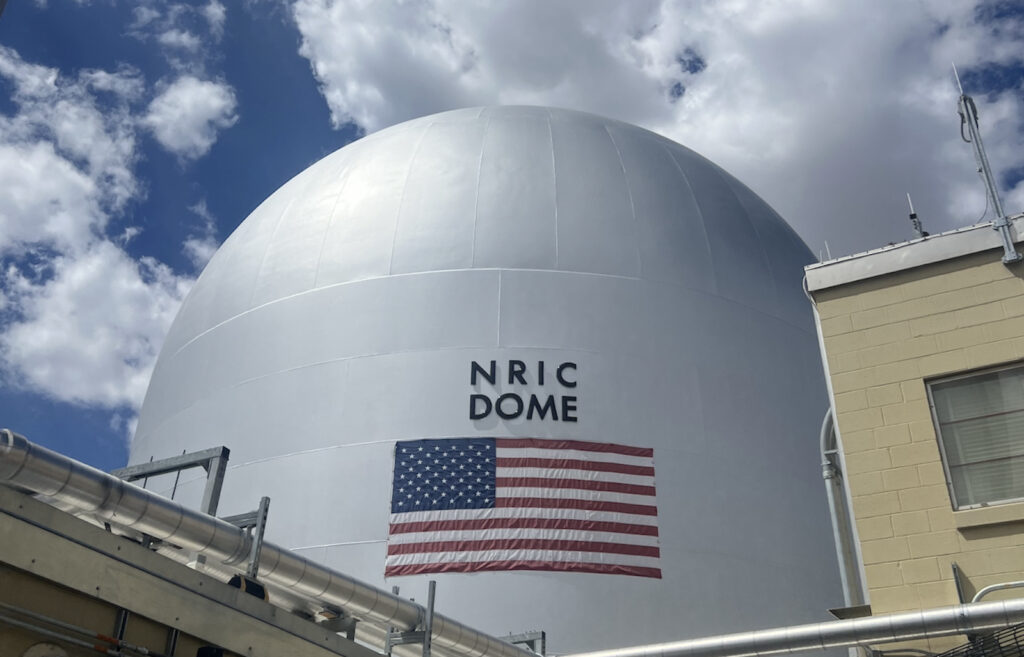
A nuclear energy startup beat the clock by a month when its advanced reactor reached a milestone pivotal for safe operation, advancing a goal set by President Donald Trump last year.
Trump signed a series of executive orders in May of 2025 that called for American nuclear power to be quadrupled by 2050 and for three pilot nuclear reactors to reach criticality – a vital milestone where a nuclear reaction becomes self-sustaining – by July 4, 2026.
The success is tempered by concerns about regulations and other factors that currently limit nuclear power’s growth, something experts addressed with The Lion.
Antares Industries of Torrance, California, which launched in 2023, successfully demonstrated its Mark-0 microreactor June 4 at the Department of Energy’s Idaho National Laboratory, causing DOE to proclaim, “The rebirth of America’s nuclear industry has officially arrived.”
Despite the recent development, the American nuclear industry has consistently faced expertise shortages and capital investment challenges, insiders say. Several energy policy experts and industry insiders said that if radiation safety models that drive much of the permitting process are updated to reflect current science, it could help clear hurdles needed to allow for the nuclear “renaissance” the Trump administration wants to unleash.
“It is fitting that on the eve of our nation’s 250th anniversary, we are witnessing a historic moment for American energy,” Energy Secretary Chris Wright said in celebration of Mark-0. “For the first time in more than four decades, a new privately developed non-light-water reactor has reached criticality in the United States. … I look forward to seeing continued progress in the American nuclear renaissance.”
First reactor in nearly 50 years
Researchers and spokespeople from Idaho National Laboratory told The Lion that although the lab has overseen the construction and operation of 52 reactors over the decades, a new one hadn’t been built on the site since 1977. Trump’s executive orders then sparked what has become known around the lab as the “race to 53.”
Some lab researchers told The Lion they had grown what they called “criticality beards” ahead of the first reactor reaching the milestone, facial hair they planned to shave following the first successful demonstration.
Though nuclear advocates have hailed the developments, some experts at the lab have also flagged barriers for the technology, writing in a July 2025 report that the modeling underpinning current radiation safety standards fails to reflect modern science and has caused a “restrictive regulatory regime” to emerge.
Radiation safety standards such as ALARA, short for “as low as reasonably achievable,” and the linear no-threshold model, often called LNT, have created headaches for the nuclear industry for decades.
Though industry insiders and energy policy experts told The Lion that nuclear radiation is handled safely, these models impose safety limits that they argue stifle development at a time when American energy demand is rising.
“The LNT model is a contested scientific hypothesis, not settled science,” Seth Kanter, health physics and radiological engineering manager at Idaho National Laboratory, told The Lion. “LNT extrapolates from high-dose data – primarily atomic bomb survivor studies – and asserts that any radiation dose, no matter how small, carries some proportional risk. … There is no evidence that current worker dose levels produce adverse health outcomes, and the proposed regulatory changes do not alter that reality.”
Kanter added that changing ALARA would restore it to its original intent of providing a “structured, cost-benefit optimization framework applied where it makes engineering and safety sense – not a mechanism for pursuing dose reductions of diminishing scientific value at significant economic cost.”
“Workers will remain safe, as they are today,” he said. “The deeper challenge here is public perception.”
Nuclear gaining public support despite safety concerns
Safety concerns – including fears of catastrophe and risks to human health – are the most common reason cited by those who oppose expanded nuclear power, according to October 2025 Pew Research Center data.
Support for nuclear energy has grown among Americans, though, and recent Gallup polling found Americans are now more likely to want a nuclear power plant built near them than an AI data center.
Technology companies are eyeing nuclear power as a resource to help power their data centers, and China is on course to surpass the United States and Europe in nuclear capacity by 2030 as it races to bolster artificial intelligence, according to a recent report from MIT Technology Review.
James Walker, CEO of NANO Nuclear Energy Inc., told The Lion that “executive orders do not build reactors by themselves, but they can change incentives, timelines, and institutional confidence. … There’s been more urgency around moving projects out of research mode and into execution.”
Walker confirmed that LNT poses major challenges to developers, as “it can create layers of conservatism that become increasingly difficult to justify at very low exposure levels. For advanced reactors, that matters because we’re not always working with conventional configurations, conventional fuels, or conventional deployment models. You can end up spending substantial time, engineering effort, and capital proving scenarios that have little practical effect on public safety but still carry regulatory weight.”
Like Idaho National Laboratory researchers, Walker emphasized that safety remains the top priority. The laboratory also recently unveiled a first-of-its-kind microreactor test bed that provides a “safe, flexible and capable environment for testing experimental reactor concepts.”
“These nuclear entrepreneurs that are working on stuff at the labs … They’re working on great technology, they’re doing great things, but if they don’t get that LNT fixed, they’re going nowhere with all of it, and the industry has just been terrible,” Steve Milloy, Energy and Environment Legal Institute senior fellow and a former Environmental Protection Agency transition team member for the first Trump administration, told The Lion. “I don’t know what the nuclear industry is waiting for. I don’t know what the administration is waiting for. The clock is ticking on all this stuff.”
Will regulations be updated?
Diana Furchtgott-Roth – a distinguished fellow at the Energy Policy Research Foundation who served in several presidential administrations, including the first Trump administration – told The Lion she agrees that nuclear regulations do not reflect current scientific understanding.
“There’s great hope for nuclear power [with] the combination of President Trump’s executive orders, the additional drive coming from AI, and the push globally for emissions-free energy,” she said, adding that the United States should partner with other countries that have embraced nuclear power, such as Japan and South Korea.
Furchtgott-Roth said it was necessary that Trump ask the Nuclear Regulatory Commission to “adopt science-based radiation limits, because right now nuclear power plants have to emit less radiation than microwave ovens. It’s really going overboard in terms of the safety.”
Trump directed the Nuclear Regulatory Commission to reconsider ALARA and LNT on May 23, 2025, in consultation with the Department of Energy, the Department of Defense and the Environmental Protection Agency.
When asked about the administration’s progress on the matter, the Nuclear Regulatory Commission referred The Lion to its website, which outlines a timeline calling for a proposed rule by July 2 and a final rule by Dec. 31. The Environmental Protection Agency told The Lion it is coordinating with the Department of Energy and the Nuclear Regulatory Commission on the matter.
The Department of Energy pointed The Lion to the Nuclear Regulatory Commission regarding questions about ALARA and LNT, and a spokesperson for the Office of Nuclear Energy said the agency “anticipates that multiple companies participating in the Reactor Pilot Program will be positioned to achieve criticality by July 4.”
“The Department also anticipates several other companies reaching this milestone later in the summer, reflecting continued progress and momentum within the program,” the spokesperson continued.
A spokesperson for Oklo, one of the nuclear companies selected under the pilot program, told The Lion that its Aurora powerhouse project broke ground near Idaho National Laboratory and that its Groves Isotope Test Facility is targeted to reach criticality in July 2026.
Additionally, the Department of Energy recently selected several companies, including Oklo, to enter advanced negotiations for a program aimed at providing surplus plutonium to the private sector so it can convert the material into fuel for advanced nuclear reactors.
If confirmed, it “would allow Oklo to work with DOE to safely, securely, and responsibly advance the use of surplus plutonium as reactor fuel for advanced fast fission power plants such as the Aurora powerhouse,” Bonita Chester, Oklo’s head of media and communications, said.
(Image credit: Audrey Streb/The Lion/ National Reactor Innovation Center at the Idaho National Laboratory)