Another study undermines case for increased public school funding
A new report confirms what recent research has shown: spending more on public schools doesn’t necessarily lead to better outcomes.
In fact, states such as Texas and Florida that spend below the…
A new report confirms what recent research has shown: spending more on public schools doesn’t necessarily lead to better outcomes.
In fact, states such as Texas and Florida that spend below the national average on students have better results – highlighting the value of educational efficiency and educational freedom.
An analysis of a report from the liberal Education Law Center found high-spending New York scoring slightly below the national average on the National Assessment of Educational Progress (NAEP), commonly known as the Nation’s Report Card since it is the only K-12 test taken in all states.
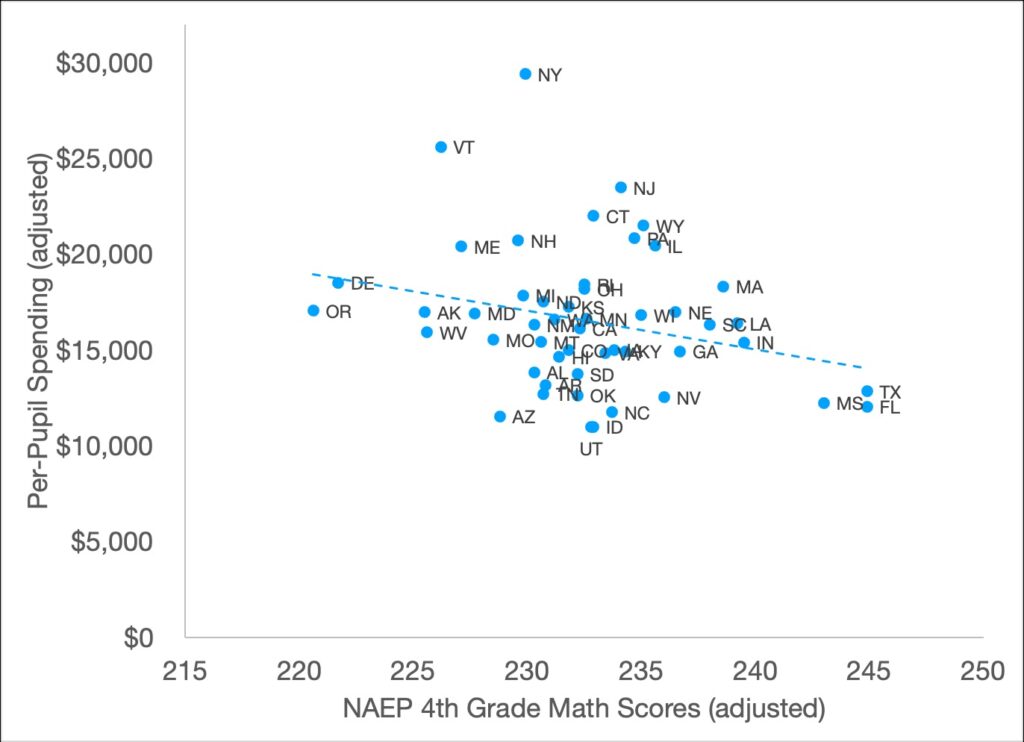
Writing in The 74, Chad Adelman revealed how the Empire State – spending nearly $34,000 per pupil, or $15,500 more than the national average – didn’t translate that investment into better test scores. The state even received high marks for distributing funds across the state, including to needy districts and populations, yet couldn’t boost performance. The trend holds in other high-spending states such as New Jersey, Connecticut and Vermont.
The spending amounts were adjusted based on cost-of-living differences, and the test scores came from 2022 – the last year for which comparable spending data was available.
On the other hand, three states scored well in terms of using funds and hiring staff efficiently: Texas, Florida and Mississippi.
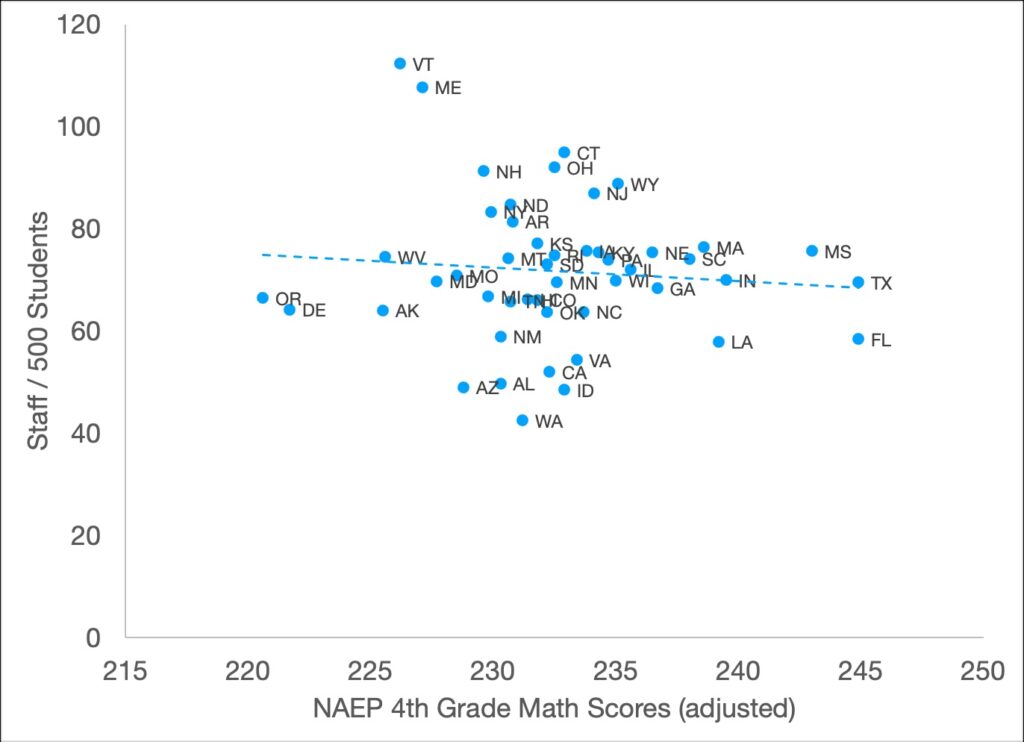
Texas and Florida are significant because they are the second- and third-largest states in the nation, with broad and diverse populations. Mississippi is the poorest state.
Yet each has found ways to improve educational outcomes despite limited spending.
Florida is the nation’s leader in school choice and school flexibility, with more than half its students educated outside the traditional, locally zoned public school setting.
Texas recently passed the nation’s largest day-one school choice program, which will begin in 2026, even as it boosts funding to public schools.
Mississippi has instituted reforms such as new curriculum, a strong school accountability system and a third-grade reading requirement that have boosted student achievement significantly over the last decade. These could be models for other states.
“Some of these initiatives even cost money, but they didn’t add up to that much relative to the state’s overall education budget, and they helped students in Mississippi leap over their peers in higher-spending states,” Adelman writes.
More school funding does boost student achievement in some cases, he writes, but there are limitations. Efficient spending is possible, as states like Mississippi and Florida prove – and should be encouraged.
“It’s hard to have these types of nuanced conversations when some advocates continue clamoring for more money, even in well-funded states and communities,” Adelman says.