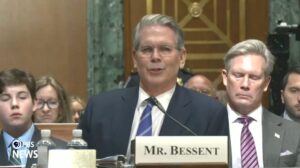
Bessent explains desire for quick ruling on tariffs
(The Center Square) – U.S. Treasury Secretary Scott Bessent told the nation’s highest court that tariffs are the only way President Donald Trump can protect the U.S. from “a major economic and…
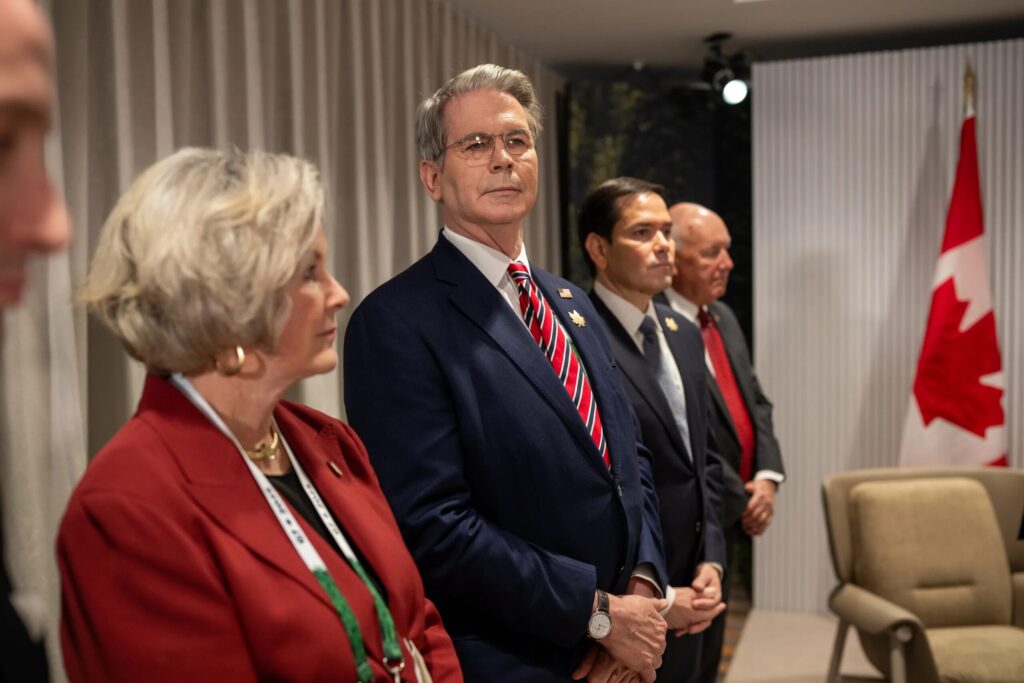
(The Center Square) – U.S. Treasury Secretary Scott Bessent told the nation’s highest court that tariffs are the only way President Donald Trump can protect the U.S. from “a major economic and national-security catastrophe.”
Trump used a 1977 law that doesn’t mention tariffs to reorder global trade through tariffs to try to give U.S. businesses an advantage in the world market. Using tariffs under the International Emergency Economic Powers Act, Trump hit nearly every nation with import duties of at least 10%. Some countries face higher rates, up to 50%.
Before using tariffs, Trump declared a national emergency over fentanyl smuggling and a long-standing U.S. trade deficit that he said was at a tipping point that could lead to financial disaster.
“Due to IEEPA tariffs, six major trading partners and the 27-nation European Union have already entered into framework deals with the United States, accepting tariff arrangements heavily recalibrated in America’s favor and agreeing to make approximately $2 trillion of purchases and investment in the United States’ economy – with trillions more under negotiation with countries across the world,” Trump’s legal team wrote in filing with the U.S. Supreme Court.
Two lower courts have already said the 1977 International Emergency Economic Powers Act doesn’t give the president unbounded tariff authority.
Last Friday, the U.S. Court of Appeals for the Federal Circuit affirmed a previous lower court ruling, but said Trump’s tariffs could remain in place while the administration appeals to the U.S. Supreme Court. In the 7-4 decision, the majority said that tariff authority rests with Congress.
Bessent told the high court that speed is critical.
“Swift review of that decision is necessary to avoid derailing critical ongoing negotiations with our foreign trading partners and threatening broader U.S. strategic interests internationally,” he wrote in a declaration.