Former Navy SEAL sniper instructor relates military training to parenting tactics
How does a former Navy SEAL sniper instructor teach his children to obey him?
Through “positive psychology,” Brandon Webb told The Independent, who interviewed…
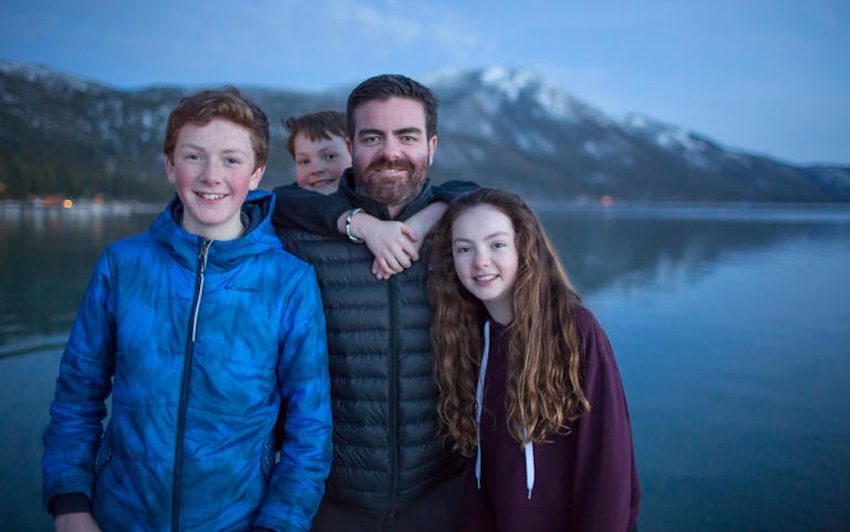
How does a former Navy SEAL sniper instructor teach his children to obey him?
Through “positive psychology,” Brandon Webb told The Independent, who interviewed him regarding his book “Puddle Jumpers: Powerful Mental Techniques from a Navy SEAL Performance Coach and Father of Three.”
“I think the immediate judgment … is, oh, here’s this tough Navy SEAL dad being super strict with his kids,” he said. “But when you read the book, it’s not the case at all. I’m coming from a very compassionate place on how to parent.”
Instead of parents yelling or trying to recreate boot camp at home, Webb advises them to check the way their words “can shape a child’s inner voice for life.”
“The way we speak to our children becomes their inner dialogue,” he explained. “I want to be the cheerleader in my kids’ head. Not the opposite.”
By focusing on four principles emphasized in sniper training – “visualization, a positive outlook in all situations, self-image management and positive verbal cues” – Webb encourages parents to set children up for long-term success.
‘Why can’t this apply to parenting?’
Many moments in Webb’s life and career led to the inspiration for his book, including the time he changed the SEAL program to emphasize positive psychology.
“If I say to a trainee who’s learning how to use a high-power rifle, ‘You’re flinching,’ that puts it in his head,” he noted. “You can’t point out mistakes, especially in front of other people, because then it just spreads, infecting everyone like a virus — setting them up for failure.”
After these changes in the program, the failure rate dropped from 30% to 1%, causing Webb to think, “Why can’t this apply to parenting?”
Another pivotal moment occurred when he saw his son, then 6, preparing to jump into a puddle during a ski trip.
“By stopping him I wasn’t protecting him,” Webb wrote. “I wasn’t helping him. I wasn’t looking out for him at all. I was projecting my own adult baggage onto a six-year-old who just wanted to jump in a puddle.”
Ultimately, he realized he wanted to raise children “who jump into life, not around it.”
“It’s incredibly important to positively imprint desired outcomes or behavior – not reinforce the negatives,” Webb said.
‘Preparing children for life’s inevitable disappointments’
Despite the affirmations, Webb is quick to note parents should avoid overprotecting their children.
“It’s tough to watch your kids suffer,” he said. “But the world is tough. It’s not always fair. They’ve got to learn to deal with this stuff.”
For example, when Webb’s oldest son had reached $17,000 in credit card debt, Webb refused to rescue him financially.
“Instead of bailing him out, Webb told him to figure it out,” Andrea Cavallier wrote for the Independent. “His son did and was better for it, Webb said.”
In another real-life instance, Webb remembered telling his children to stop fighting while the family was driving to SeaWorld.
When they didn’t stop, Webb decided to cancel the trip altogether.
“When we finally went back two weeks later, they were all quietly reading in the back seat,” he said. “They need to know you’re not messing around.”
This approach dovetails with other trends noted in a recent survey, where Generation Z parents are working to raise children with tough love.
“There’s an intentional focus on preparing children for life’s inevitable disappointments instead of sheltering them,” wrote The Charlotte Post. “Survey findings also revealed these younger parents follow their own intuition (47%) slightly more than they follow their parents’ advice (46%).”
Gen Zers, who were typically born during the late 1990s to early 2010s, came of age during a challenging job market after the COVID-19 pandemic.
As a result, 40% of them see the need to be “practical, resilient and future-ready,” the survey found.
“This paradigm shift in parenting reflects the real-world focus of Gen Zers compared to previous generations … more ‘actions have consequences’ than ‘trophies for everyone,’” The Post wrote.
‘One intentional day with your child’
Additionally, Webb recommended prioritizing the time parents spend with their children.
”Quality time is not a parenting concept,” he concluded. “It is the whole game. And why one intentional day with your child is priceless.”
This investment into the lives of his children is already paying dividends, Webb noted – citing a note his son once left for him: “I feel like I won the dad lottery.”
“The return on that investment did not come from the sheer volume of time I spent with him,” Webb said. “It came from the quality of the time I spent with him and his siblings. The specific, intentional, undivided time.”
Webb also discussed disciplining children with love, not anger.
“There’s a stereotype that we’re strict,” he said of military veterans. “If anything, combat veterans are more empathetic. They’ve seen the worst of human nature, and that actually makes them caring parents.”
Empathy can mean addressing difficult and even painful life situations, especially for multiple generations.
Nearly half (41%) of Gen Z parents showed a strong inclination toward “cycle-breaking parenting,” described as “healing generational trauma by actively identifying and addressing negative family patterns,” The Post wrote.
“Not only does this parenting style require self-awareness and empathy, it takes courage to face unresolved issues and uncomfortable emotions.”
Webb’s parenting journey came with its challenges as well.
“After leaving the Navy, Webb went through a divorce and a failed company during the 2008 financial collapse, leaving him to ‘wing it,’” Cavallier wrote.
However, Webb expressed his gratitude over the close relationships he’s cultivated with his now-grown children.
”Parents should want to have this kind of relationship with their grown kids,” he said. “We have this great friendship and respect, and they come back and they ask for advice. And they feel supported. I mean, that’s the best that you can wish for.”