‘Largely fictional’: Trump admin exposes states for gaming welfare reporting while families stay trapped on government assistance
The Department of Health and Human Services (HHS) released a report Monday revealing states have circumvented federal requirements for a welfare program designed…
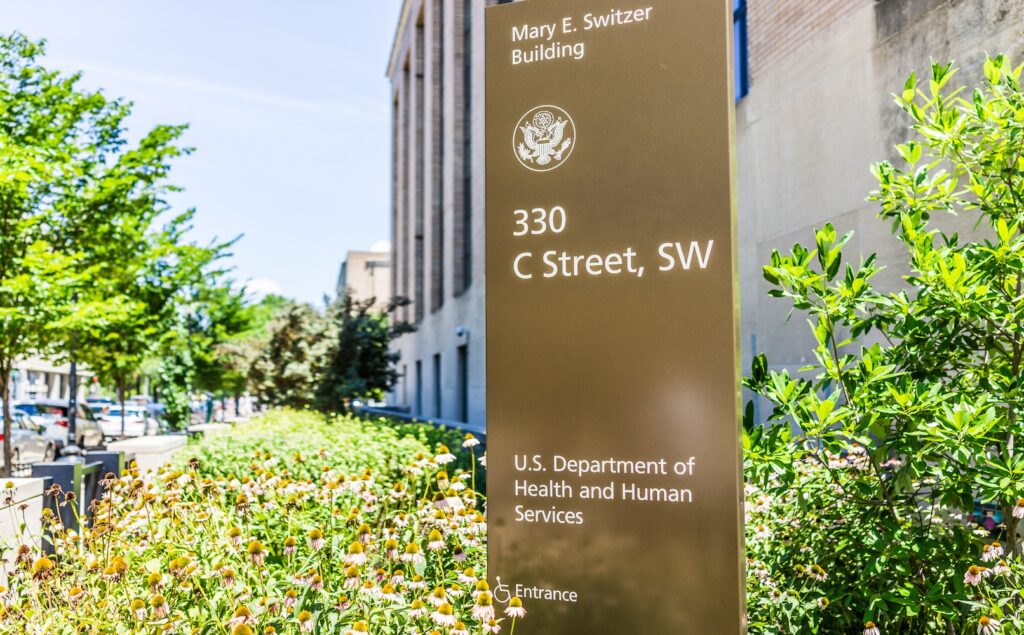
The Department of Health and Human Services (HHS) released a report Monday revealing states have circumvented federal requirements for a welfare program designed to free American families from government dependency.
HHS’ Office of Family Assistance (OFA) announced Monday that the Temporary Assistance for Needy Families’ (TANF) federal accountability system for state work performance is “far weaker in practice than many assume,” finding states have exploited loopholes to satisfy requirements on paper while skirting the program’s principal mandate.
Operated by the states, TANF provides cash assistance to low-income families with children, with the goal of moving recipients into the workforce and off government dependency. Congress created TANF in 1996 to replace the program known as Aid to Families with Dependent Children, which garnered criticism for fostering government dependency.
When it was created, Speaker of the House Newt Gingrich hailed the program as a “historical achievement that encourages personal responsibility, imposes work requirements and time limits, ends welfare for noncitizens and felons, and moves power and responsibility back to the States and communities.”
The report, titled “TANF and Work: The Gap Between Perception and Reality,” states that though the program is often seen as successful, states have been exploiting loopholes in the program’s central accountability mechanism.
“The program’s public image remains rooted in the original vision: cash assistance should be temporary and focused on work,” the OFA announced. “In practice, TANF’s work requirement now often rewards paperwork and accounting strategies more than actual movement from welfare to work.”
The work participation rate measures state performance, and states that fail to meet the standards are at risk of getting penalized, though the report states “the penalty process can be years of paperwork that ultimately results in no real consequences.”
Generally, states are required to have at least 50% of recipient families with an individual eligible for employment to be working for a certain number of hours.
The report terms the 50% work participation rate as “largely fictional,” as 39 states reduced their targets to 0%. States accomplished this through caseload reduction credits, a provision lowering a state’s required work participation rate when its caseload shrinks.
The agency found only 8% of recipient families in 2024 had an individual covering enough unsubsidized employment hours to count under the program’s federal work participation measure.
The rate rose to only 19% when considering a broader population that includes “token payment” cases, which the HHS says are used to artificially boost reported work participation rates.
HHS notes the work participation rate increase from 8% to 19% is explained “primarily from ‘token payment’ programs where states pay minimal benefits (as low as $1 per month) to working families solely to boost their work participation rate.”
Many families report no work participation, with more than half of families with an individual eligible to work reporting zero hours of participation in work-related activities in 2024, the report states.
The report is the first in a series about TANF work requirements, and other anticipated reviews will examine why the federal accountability system has been effectively reduced to a “compliance exercise,” according to the report.