Latin America’s conservative wave followed collapse of billions in U.S. funding schemes
A wave of conservative political victories in Central and South America has followed cuts to State Department and U.S. Agency for International Development funding.
The results, including…
A wave of conservative political victories in Central and South America has followed cuts to State Department and U.S. Agency for International Development funding.
The results, including Keiko Fujimori’s apparent win in Peru on Monday, suggest U.S. nongovernmental organization funding has been used for years to prop up the ideological left, rather than build up American interests in the Western Hemisphere.
A look at government documents suggests that U.S. Agency for International Development (USAID) funding has been just one portion of taxpayer money financing leftist political victories in Central and South America.
The pattern is eerily similar to the documented record of U.S. government NGO funding being used to prop up Democrats’ left-wing allies and associates domestically over the years.
For decades, USAID functioned as something more than a humanitarian organization in Latin America. The agency’s mission, internal documents, congressional hearings and personal testimony have documented a sprawling network of leftist NGOs, media outlets and civil society organizations.
“For years, the Democrats have turned USAID into their personal slush fund, funneling billions of our hard-earned tax dollars into a cesspool of left-wing propaganda, all masquerading under the guise of charitable aid,” said Republican Rep. Eric Burlison of Missouri.
And as election results continue to favor conservatives in Latin America, the light on political aid spending is just getting brighter.
A marked political shift
The electoral results across the region have been striking.
In Bolivia, voters ended nearly 20 years of left-wing rule in Oct. 2025, electing conservative Rodrigo Paz in a runoff vote that didn’t include a leftist.
In Honduras, Trump-backed conservative Nasry Asfura was certified the winner in Dec. 2025, beating the ruling party’s leftist candidate, who finished a distant third, below 20% of the vote, in a race that also featured two conservative candidates battling for the top spot.
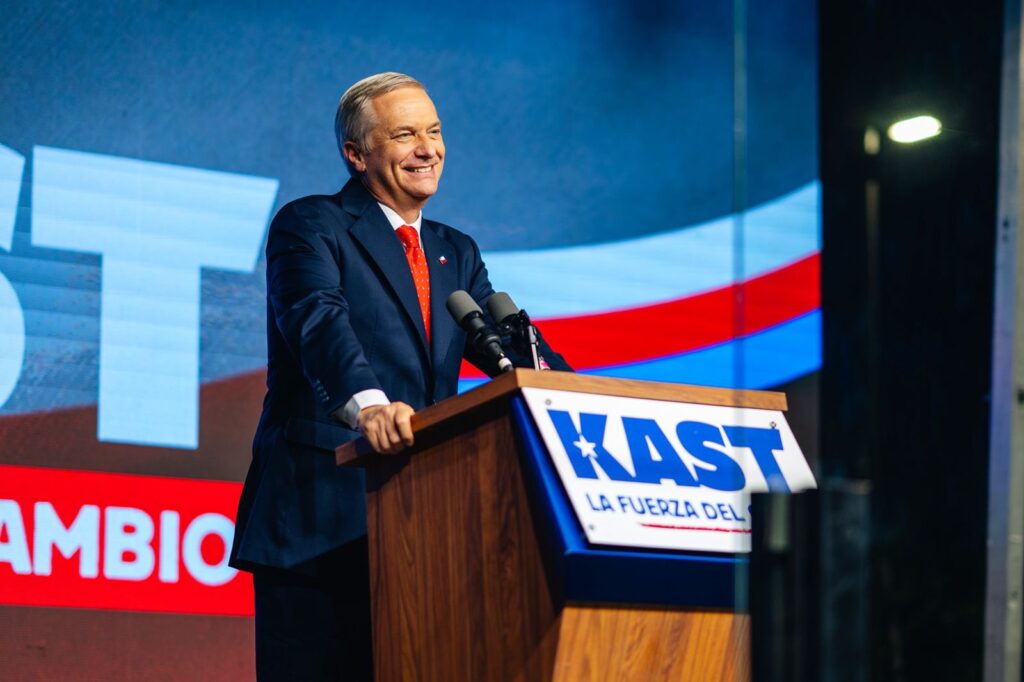
Conservatives also prevailed in Chile, where José Antonio Kast won with 58%, The Lion reported.
“Chile has given us a clear mandate that allows not excuses,” Kast, Kast, a pro-life, Catholic conservative who has nine children, said in his victory speech. “This mandate does not permit delays. Chile wants change, not continuity. It has said so loud and clear.”
Of further note, Argentina’s libertarian President Javier Milei won a landslide in Oct. 2025 midterms, his party taking about 41%, nine points in front of the left, roughly doubling his legislative seats.
The shift has been built on the template set by El Salvador’s Nayib Bukele, whose hardline security model and 2024 reelection reshaped the region’s politics.
“We are celebrating, thanking him, thanking God, for getting us out of this gang problem,” said Guadalupe Guillen, a 55-year-old shopkeeper who backed Bukele.
She told Reuters she no longer pays $300 in extortion to the gangs.
“We don’t want to go back to that horrible past.”
Before those victories, that horrible past included a U.S. funding apparatus that went to social justice programs in Latin America that extended well beyond USAID.
Billions in aid
The State Department allocated roughly $2 billion in assistance to Latin America and the Caribbean in fiscal 2022, a 13% increase over fiscal 2021, according to the Congressional Research Service.
On top of that baseline, the Biden administration layered billions more.
By May 2024, total U.S. humanitarian assistance for the Western Hemisphere had reached more than $3.9 billion since fiscal 2021, according to the State Department.
That funding was directed to “civil society,” international organizations and so-called migrant populations.
“Assistance provided through international organization partners to support the most vulnerable refugees and migrants and their host communities’ critical needs,” said State, “including emergency shelter, food assistance, access to health care and education, water, sanitation, and hygiene supplies, support for livelihoods, assisted voluntary returns, and protection for those in situations of vulnerability, including women, children, and youth, LGBTQI+ individuals, persons with disabilities, and Indigenous persons.”
The descriptions bear a striking resemblance to domestic illegal immigrant-support programs funded elsewhere in the federal government that are now under investigation for abuse.
But the largest layer of funding was branded as private aid, even as some of the aid can be traced back directly to the federal government.
Through Vice President Kamala Harris’ Call to Action and its successor, Central America Forward, the administration and the Partnership for Central America announced more than $5.2 billion in commitments since May 2021, coordinated through a single nonprofit hub.
The hub, Central America Forward, listed 57 participating companies and organizations.
Alongside big corporate names sat U.S.-based development nonprofits that receive substantial federal funding, including TechnoServe, Root Capital and Acceso, a program that was launched “in partnership with USAID.”
Federal records show the three nonprofits held active government awards worth a combined $239 million, including more than $217 million obligated to TechnoServe alone, much of it through USAID and cooperative agreements awarded between 2021 and 2024.
Root Capital and Acceso received awards of $14,490,463 and $7,588,398, respectively.
The TechnoServe mechanics are instructive.
According to Cato, rather than giving money directly to TechnoServe, the U.S. government buys commodities like wheat in its Food for Progress program, then sells it at a loss in a foreign market.
The program exists even though a regional study in Oct. 2025 showed that Central America already produces more than enough calories to feed its population.
Central America Forward and TechnoServe proudly document how those Food for Progress funds then flow into programs that read like a laundry list of progressive policy initiatives and NGOs.
Diversity, equity and inclusion, technical assistance and mentorship for women-led businesses, climate change mitigation, closing the digital gender gap and “upskilling initiatives in communities” lead the pack for spending.
Yet unemployment across the region runs at or below U.S. levels, with Guatemala at about 2.6%, El Salvador at 3.3% and Honduras near 4.9% in 2025, according to World Bank data.
That compares with 4.3% unemployment in the U.S.
Critics warned that defunding USAID and other foreign aid would destroy decades of institution-building and put human lives at risk. But the lack of a collapse in Latin America suggests there were no institutions behind the aid money, just political parties.
“And what did we get for it?” added Burlison. “Not stronger allies, not safer borders, and hardly a dime’s worth for the American interest. No, we got absurdity for it. Taxpayer cash bankrolling climate activism, DEI that is frequently at odds with the values and the needs of the countries that we’re supposedly aiding. This isn’t aid. It’s a shake-down of our taxpayers courtesy of the left-wing bureaucracy working with dark-money networks.”