New York’s socialist budget crisis goes national
With an unalloyed socialist as the new Democrat Party boss, New York City is facing a budget crisis that could serve as the canary-in-the-coal mine for…
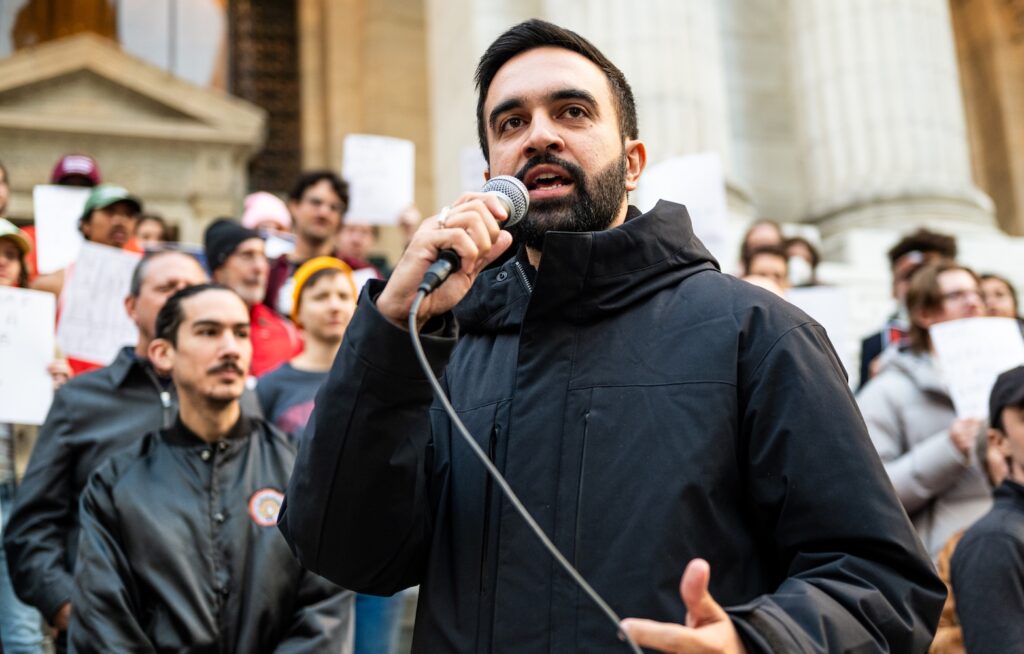
With an unalloyed socialist as the new Democrat Party boss, New York City is facing a budget crisis that could serve as the canary-in-the-coal mine for big-spending, big-taxing liberal domains.
The nation’s largest city already looked like a progressive cautionary tale before Mayor Zohran Mamdani took office in January – overflowing with ideas discarded from early 20th century’s slag heap of history.
But now think tanks, media reports and even the country’s most progressive debt-rating agency are warning the canary may be already dead – with its feet sticking up straight in the air.
Indeed, news broke last week the city’s budgetary woes are worse than Mamdani’s own administration projected.
“The stark reality [is] that the City is spending far more than it takes in, a structural imbalance between operating expenditures and revenues,” said a report by City Comptroller Mark Levine.
The report found a projected $7.3 billion shortfall over the next two years – roughly $2 billion more than the mayor’s own estimate, which it termed “optimistic projections.”
The bad news didn’t stop there.
Credit rating agency Moody’s changed its debt outlook for New York City to “negative,” citing “large and persistent” budget imbalances.
Levine, in a separate statement on the downgrade, called it a “sobering wake-up call,” noting the timing was “all the more remarkable” given the health of the local economy.
Even if Mamdani raises property taxes, taps city reserves and secures a state bailout, Levine’s office concluded the preliminary budget still comes up short – though the comptroller’s analysis also railed against proposals to raise property tax and raid reserves, calling the moves harmful to the poorest residents.
Meanwhile, New York’s progressive city council, spending money a broke burg doesn’t have, is pushing to boost its own budget by 10%, even as officials publicly cry poverty, reported the New York Post.
And at the state level, Albany’s Democrat majority has responded to a Mamdani pressure campaign to raise taxes, including new tax hikes on “the rich.”
“Albany Sides with Socialist Mayor,” blared WABC radio about the tax-the-rich proposal.
None of the alarm bells has slowed Mamdani’s budget-breaking ambitions. His agenda calls for rent freezes on roughly 1 million stabilized apartments; universal free childcare; free city buses; and city-owned grocery stores.
More controversial still is a socialist “Department of Community Safety” estimated to cost $1.1 billion annually, money that would be taken away from police and given to social workers.
Mamdani’s centerpiece labor proposal, raising the minimum wage to $30 by 2030, would represent a 76% increase from the current minimum wage, a shock that critics warn would spur mass layoffs and inflation.
“A $30 minimum wage would force employers to only keep the most productive workers and cut lower-skilled employees,” wrote the Heritage Foundation, keeping with the recurrent theme of policies supposedly designed to help the poor actually putting a target directly on the backs of the poorest workers.
Heritage noted Seattle’s experience in raising minimum wages as a preview. End-of-year unemployment jumped 36% by 2025, with layoffs in accommodation and fast-food rising more than 1,200% year-over-year.
Yet somehow, politics is one of New York City’s only remaining exports. Politicians from Chicago to Los Angeles to Seattle watch what New York does and use it as a permission slip for their own socialist ambitions.
Perhaps as a result, Chicago saw credit rating agencies cut the credit worthiness of the city, with one noting a “structural budgetary imbalance” similar to the language describing New York City.
The Washington Post editorial board went further, saying Chicago must seek state permission to declare bankruptcy. Illinois, noted the editorial board, is facing its own self-imposed budget crisis.
Other states find themselves in the same predicament. The culprit? State and local government expenditures rose from $1.6 trillion in 2003 to $3.8 trillion in 2023, according to the Federal Reserve Bank of St. Louis.
As of 2023 non-federal governments remained roughly 9% above their own long-term trend line for spending. But instead of facing their spending problems, states and cities are looking for new sources of taxes and, almost unbelievably, new spending.
Evidence from other blue states is damning.
The Heartlander reported Washington State’s new 9.9% millionaires’ tax triggered an immediate exodus, with iconic Starbucks founder Howard Schultz heading to Miami, while his iconic company announced new corporate offices in Nashville, Tennessee – a state offering tax breaks rather than tax threats.
California, Maryland, Minnesota, Michigan and New Jersey are all considering a tax on the rich – or a tax on wealth itself – to make up for structural deficits created by overspending.
Critics have warned the trend is creating an outmigration crisis for blue states. Seven of the top 10 growth states are red states, notes U-Haul.
“Conversely, nine of the bottom 10 growth states feature Democrat governors, and seven of those states went blue in the last presidential election,” said the moving rental company.
Critics say states such as New York and California can better weather outmigration because they have geographic features that attract movers. But other blue domains don’t fare as well.
“Clearly people are willing to pay a lot to live in New York City or San Francisco,” such as high taxes, high rent and higher cost of living, said Andrey Yushkov at the Tax Foundation, before adding the killer question: “Will people be willing to shoulder a similar tax burden to live in Detroit?”
That’s why, when New York City produces policy that fails, the failure is continental in scale, as the progressive policy consensus that produced it reaches into every blue mayor’s and governor’s office in America.
Eventually those consequences trickle down to every blue collar worker too – with devastating results.
New York City is simply one shaft in a bigger Democrat mine digging for tax dollars so they can increase spending.
Concluded the report by New York City’s comptroller:
“Raising the City’s already deeply inequitable property tax and drawing down long-terms [sic] reserves to close budget gaps, are troublesome actions that would bring harm to the city’s most vulnerable residents and the overall fiscal health of the City.”
Ultimately, it will be workers who will be the canaries – feet up – when the extraction fails.